A Friend, A Father and A Story That Must Be Told
In my more than 28 years serving in public safety, there are some stories that stay with you forever. This is one of them.
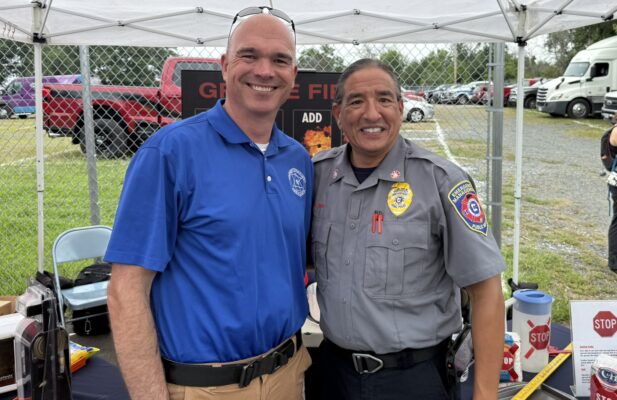
I have known Monte Fronk for well over a decade. Our professional paths have crossed many times since I moved to Minnesota in 2009. Monte is a dedicated emergency manager and first responder/firefighter/EMT for the Mille Lacs Band of Ojibwe, a respected leader, and a proud citizen of the Red Lake Band of Chippewa.
Over the years, Monte has taught me a great deal, particularly about Native American customs and traditions and the importance of honoring culture during times of tragedy.
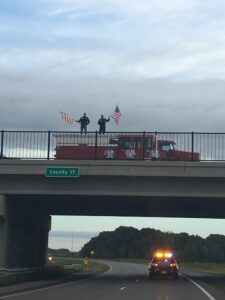
One experience that stands out occurred in 2016, when two Beartown wildland firefighters from Baraga, Michigan, James F. Shelifoe, Jr. (23) and Alan Swartz (25), were killed in a vehicle crash in Blaine, Minnesota. Monte and I worked closely alongside dozens of firefighters and public safety professionals to help bring these young men home to the Keweenaw Bay Indian Community.
Throughout that difficult process, Monte helped ensure that Native traditions and cultural practices were respected and honored. It was a powerful lesson in compassion, history, tradition, and service.
Years later, on May 26, 2021, tragedy would strike much closer to home.
At the time, I was serving as Fire Chief in Brooklyn Park. That day, Brooklyn Park police and fire personnel responded to a shots-fired incident at an apartment complex. I responded to the scene and met with law enforcement leaders in the mobile command post as SWAT operators made entry into the apartment.
When two victims were discovered inside, I would soon learn that one of them was Nada Fronk, Monte’s daughter.
My heart sank.

In public safety, we often find ourselves helping strangers through the worst moments of their lives. But sometimes the victims are not strangers. Sometimes they are the children of friends and colleagues who have stood beside you through difficult days.
In those moments, the tragedy becomes deeply personal.
I immediately thought of Monte and his family. I remember telling him that the fire service family would do whatever we could to support them. Those words were heartfelt, but no words can truly ease the pain of a parent who has lost a child.
Nada’s story would later become part of a much larger conversation about the crisis of missing and murdered indigenous women and people. Her death brought attention to an issue that continues to affect Native communities across North America. Monte has courageously shared his family’s experience to help educate others and advocate for change.
In 2021, Minnesota Governor Tim Walz signed legislation establishing the nation’s first Missing and Murdered Indigenous Relatives Office (MMIR) within the Minnesota Department of Public Safety, the agency I proudly serve as an assistant commissioner.
In the years since Nada’s murder, Monte and I have had opportunities to reflect on this tragedy together. Along with our mutual friend and fire service colleague, Rich Gaseway, we sat down for an episode of the SAMatters podcast, where Monte shared his story and spoke about the strength of the public safety family.
View the two part-interview here: Part 1 and Part 2 (the first of the series is posted below).
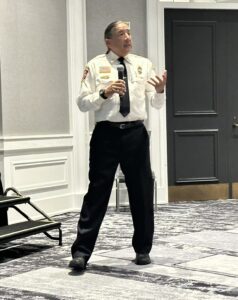
More recently, Monte and I continued these important conversations during a breakout session at the National Center for Victims of Crime Conference in 2024, where Monte courageously shared Nada’s story and we discussed the strength and support that the public safety family provides during times of tragedy.
I often describe the fire service and public safety as a family — a brotherhood and sisterhood, if you will. Experiences like this remind me why.
We celebrate together.
We serve together.
And when tragedy strikes, we stand and grieve together.
Monte has spent his career helping others through some of their darkest moments. While nothing can erase the loss of his daughter,
I continue to admire his strength, his advocacy, and his willingness to turn unimaginable pain into a voice for others.
As Monte approaches retirement, I want to offer my sincere gratitude for his decades of service to his community and the public safety profession. His retirement is well earned. The countless lives he has touched through his leadership, compassion, and service will continue to have an impact for years to come.
My thoughts remain with Monte, his family, and everyone who loved Nada.
Her story deserves to be remembered. And the lessons it carries deserve to be heard.
I also hope we will all take the time to learn more about the realities of sex trafficking and the crisis affecting Indigenous women and families. Awareness, education, advocacy, and action can save lives. Each of us has a role to play in protecting some of our most vulnerable populations.
And sometimes, the first step is simply being willing to listen to a story no parent should ever have to live.